Will our people actually accept this when it lands?
SRM is change management engineered for environments where the people cannot opt out. They take the next call. They take the next patient. They respond to the next alarm. The stakes of a bad rollout are measured in response times, patient outcomes, and officer safety.
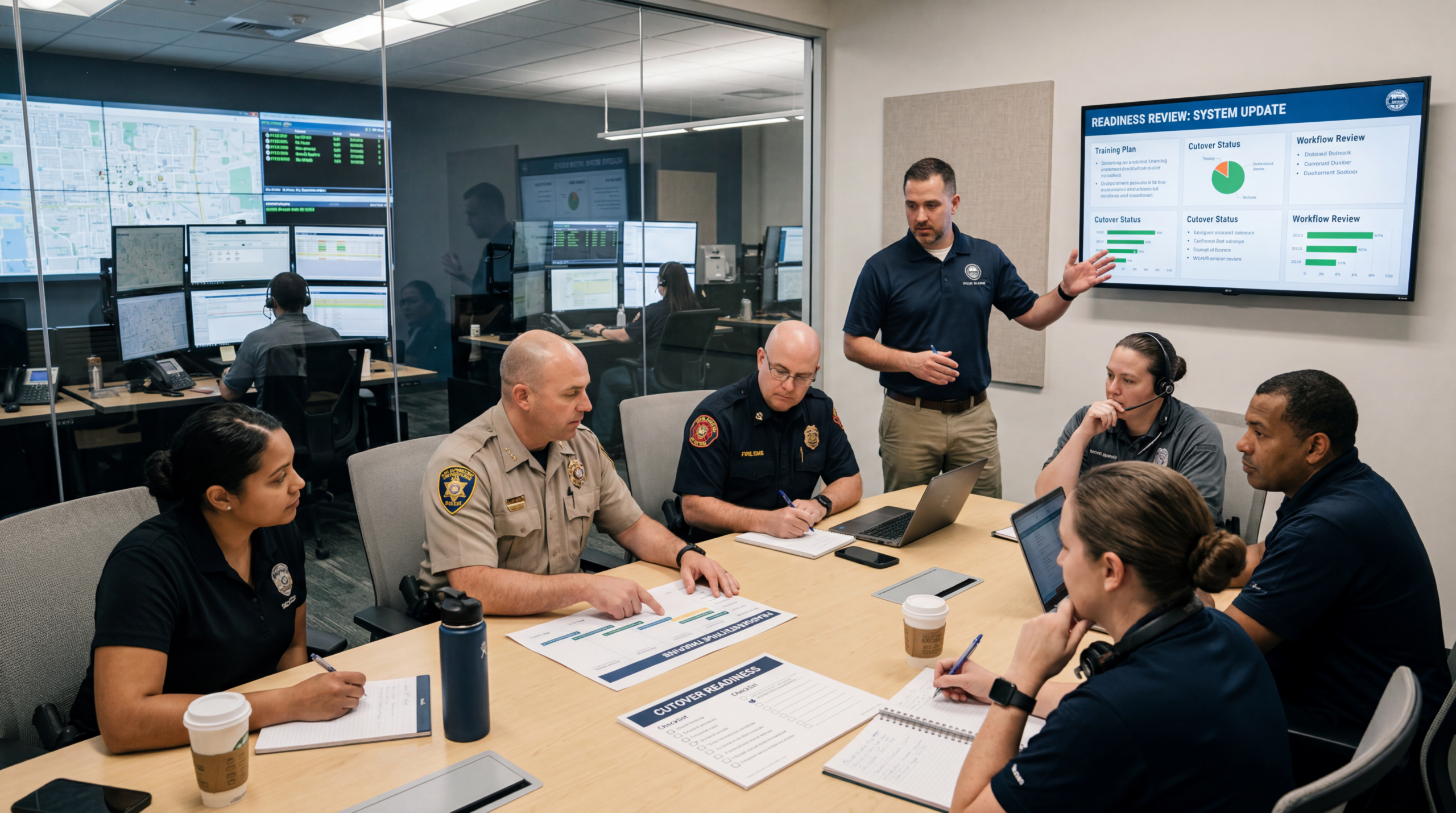
Organizational change management written for a corporate office does not work in mission-critical environments. Those environments share a defining trait: the people in them cannot opt out. When a new system lands on their shift, there is no grace period where they can take a training webinar at their desk and catch up next week.
SRM is change management built for that reality. Not corporate HR playbooks. Not generic rollout decks borrowed from private-sector consulting. A discipline designed for operational environments where the stakes of a bad rollout are measured in seconds and outcomes.
The readiness discipline has been missing from mission-critical technology deployments for twenty years. SRM is what the industry should have built. Sentinel built it.
We plan, build, and execute the readiness strategy for the humans who have to live with the system on day one. That starts with understanding the work the way the workforce actually does it: shift-based, role-stratified, and often under conditions that do not pause for training.
It continues through role-based readiness planning, champion network development, shift-aware communications cadence, targeted training path design, and the adoption instrumentation that tells us whether readiness is actually landing before it is too late.
We do not replace the agency’s training department or HR team. We build the readiness strategy they deliver, equip them with role-specific tools, and stay present through go-live and stabilization. When resistance surfaces, and in mission-critical environments it always does, SRM is the discipline that diagnoses whether the issue is competence, conviction, or conditions, and responds accordingly.
Every SRM engagement delivers a defined set of branded Sentinel artifacts. Readiness tools built for shift-based operational environments, designed to live with the agency long after go-live.
Readiness is not a feeling. It is measurable by role, by shift, by role-specific competency demonstration.
Any deployment that changes how operational staff do their work needs a readiness discipline. The earlier it enters, the better the outcome.
SRM is the practice that makes the other three matter. A program delivered on time, configured perfectly, and measured precisely is worthless if the people who need to use it will not.
SDF runs the program schedule. SRM runs the parallel readiness schedule and integrates it into the master plan so that people-readiness is never an afterthought.
SDB configures the system to the agency’s business processes. SRM prepares the people whose work those configured processes will change.
SVA measures adoption as a core value realization metric. When adoption falls short, SRM activates as a remedial intervention.
When Sentinel is engaged after a deployment has already started or finished, SRM begins with a four to six week readiness diagnostic.
We interview by role, observe by shift, audit existing training materials, and inventory the change history of the affected teams. We produce a Readiness Reality Report that names where the workforce actually stands and what it will take to close the gap.
Phase Zero closes with a jointly agreed intervention plan before Sentinel commits to outcomes. Sentinel does not pretend to govern what we did not prepare. We reconstruct the readiness baseline first. Then we intervene.
SRM is one of two Sentinel practices offered as formal training. Agencies building internal change management capability in mission-critical environments can be trained in SRM discipline through Sentinel’s Training hub. The methodology is public. The proprietary toolkits, role libraries, and engagement-specific artifact library remain Sentinel’s.
Staff turn over. Processes drift. New modules release. Sentinel Sustain keeps SRM discipline active across the life of the investment.
Annual readiness refresh cycle. Quarterly adoption measurement. Standing access for new-change activation.
Core plus monthly pulse. Champion network coaching. Quarterly shift-feedback review.
Active plus embedded part-time change lead. Annual full readiness re-baseline. Priority response on any new change event.
Ready to prepare the people who have to live with it?
Talk to a Sentinel practitionerSome technology changes an agency. Some changes a community's relationship with its agency: drones over neighborhoods, cameras on corners, automated enforcement on school routes. For those programs, change management does not stop at the building's front door. Sentinel designs and runs the community side of the rollout: engagement plans, public meeting support, transparency commitments, plain-language communications, and the humanization work that turns a controversial deployment into an accountable one.
This work runs inside the Sentinel Readiness Method™, because public trust is adoption at community scale. The agencies that survive scrutiny are not the ones with the best technology. They are the ones whose communities were treated as stakeholders before the first pole went up.
Where Public Safety Is Going
The hard part was never buying the system. It is governing it, defending it to the public, and proving it worked.
A system that works technically but fails on the floor is still a failure. The Readiness Method earns the adoption that proof of value depends on. While the phases move, Sentinel stays.
Read the Insight: Past the Cutover →