
Who We Serve · Government & Utilities

State Agencies

Independent technology governance for the agencies running statewide programs that legislators, auditors, and citizens depend on.

THE STATE AGENCY REALITY

Built for technology programs that must hold up across administrations, audits, and legislative sessions.

State agencies operate technology programs at scales most consultancies have never delivered against. Multi-year capital plans. Federal funding cycles. Audit oversight at every layer. The next administration always two years away.

0

state and territory CIO organizations operating enterprise technology programs

0

months: median state CIO tenure, while major modernization programs run multi-year

0

state CIOs receiving supplemental modernization funding outside base IT budgets in FY26

0

state CIOs that have completed responsible-use, security, and ethics guidelines for AI

THE PROBLEM WE SOLVE

One agency. Three administrations. Four budget cycles. A dozen vendor contracts. Every decision a public record.

State agency programs span more political and budgetary terrain than almost anything else in public-sector technology. Every procurement faces auditor scrutiny. Every modernization runs against the clock of the next legislative session. Every vendor knows the dynamics. The agencies need someone on their side of the table who knows them too, with no resale margin and no commission on the line.

That is the work Sentinel does for state agencies. We govern the program. We never sell the platforms.

Independent. Practitioner-led. Vendor-neutral.

Position

One agency. Many vendors. One governance discipline.

Statewide programs do not fail at go-live. They fail at year three, when the next administration arrives, the federal audit lands, and the vendor that ran the original deployment has been acquired twice. Sentinel sits on the agency’s side of every vendor decision, every audit checkpoint, and every administration change. And we produce the documentation that proves it.

The Pressures

Five forces are reshaping how state agencies deliver technology.

These are the structural pressures we hear from program managers, CIOs, and agency directors in nearly every conversation. Sentinel’s role is to help you navigate them with documentation and evidence on your side.

Heightened in 2025-2026 by the NASCIO AI procurement push and the post-ARPA technology sustainment cliff.
PRESSURE 01

Modernization timelines outpacing institutional knowledge

Procurement cycles force decisions faster than agency teams can fully evaluate them. Procurement keeps moving. Institutional knowledge does not always keep up.

PRESSURE 02

Federal funding strings and audit exposure

Match requirements, allowable cost rules, reporting cycles, and post-award audits each carry real risk. Decisions made today must withstand a federal audit three to seven years from now.

PRESSURE 03

Vendor consolidation and lock-in risk

The platform vendor space has consolidated rapidly. Today’s "best of breed" can be tomorrow’s monolithic stack with switching costs measured in years and millions.

PRESSURE 04

Cybersecurity expectations rising faster than budgets

State frameworks, federal guidance, and insurance carriers all raise the floor every cycle. Agency budgets rarely move at the same pace, and the gap shows up in audit findings and breach exposure.

PRESSURE 05

Workforce attrition and institutional knowledge loss

Senior program staff retire. Midcareer technical staff move to better-paying private sector roles. The institutional knowledge of why a system was configured the way it was leaves with them.

Our Approach

We govern the program. We never sell the platforms.

State agency program governance

State agency technology is not a product purchase. It is a multi-year statutory program built on legislative authority, federal funding rules, and the contracts an agency signs with every vendor that touches statewide service delivery. Most agencies inherit a technology posture written by procurement, defended by IT, and never owned by an independent governance authority that answers to the agency director and to the public record. We change that.

Sentinel reads the actual contract language. We map it against the statute the program serves and the federal rules that bind the funding. We document the decisions before the next administration arrives and before the next audit cycle lands. The artifacts we produce are structured under the assumption that they will be read by counsel, by an OIG examiner, by a legislative oversight committee, and by the citizens whose services depend on the system staying operational.

Our work is independent. We sell no platforms. We collect no referral fees. Every recommendation is auditable, defensible, and built to survive the year-five conversation when the original vendor has been acquired, the original program staff have moved on, and the agency still owns the consequences.

While the phases move, Sentinel stays.

What We Do Here

How Sentinel shows up inside a state agency program.

Independent program assessment and gap analysis against the agency's own program goals, not a vendor's product roadmap
Vendor selection oversight and procurement evaluation, with documented adequacy review at every checkpoint
Configuration authority across enterprise platforms, translating statute and policy into platform behavior
Change management for cross-divisional and statewide rollouts that touch multiple county and field offices
Audit-ready documentation and decision records that hold up to OIG, GAO, and state legislative oversight
Post-go-live value assurance and sustainment, so the system is still delivering the outcomes promised three years out
Cyber posture review aligned with state and federal frameworks the agency answers to
Workforce transition planning for retirements, midcareer turnover, and the knowledge that needs to outlast any individual
Public records preparation and legislative briefing support for committee testimony and budget hearings
Long-term roadmap independent of any single vendor's incentive structure or product release cycle
The Sentinel Difference

Four practices. One program discipline. End to end.

Forged in public safety. Trusted across statewide programs. From statute to year-five outcome, Sentinel’s signature practices govern every phase of the agency’s technology program.

STATE AGENCY PROGRAM LIFECYCLEPOLICYAUTHORIZATIONStatute & fundingVENDORSELECTIONRFP & evaluationSTATEWIDEDELIVERYMulti-county rolloutAUDITCYCLEOIG / GAO / LegislativeYEAR-FIVEOUTCOMECross-administration sustainmentSDFSENTINEL DELIVERYFRAMEWORKPRACTICEStatewide ProgramDeliverySRMSENTINEL READINESSMETHODPRACTICECross-DivisionReadinessSDBSENTINEL DEPLOYMENTBLUEPRINTPRACTICEConfigurationAuthoritySVASENTINEL VALUEASSURANCEPRACTICEMulti-AdministrationOutcome Governance
Specialized Services

Three discrete deliverables. Scope-defined. Boundary-respected.

For agencies that need a defensible artifact this quarter, not a six-month conversation. Each engagement is fixed-scope, independently delivered, and structured to survive scrutiny.

Independent Pre-Procurement Assessment

Before the RFP closes

Independent gap analysis of vendor responses against the agency’s actual program need, conducted before procurement closes. Produces a defensible scoring memo that lives in the procurement file and survives a protest, an audit, and a leadership change.

Output: a procurement-file scoring memo built to survive bid protest, OIG review, and legislative inquiry.

Audit-Defense Documentation Build

For the audit you do not yet know is coming

Pre-emptive documentation package for OIG, GAO, or state legislative review. Sentinel reconstructs the decision history, maps it to statute and federal funding rules, and produces a public-records-grade record for any program checkpoint.

Output: a complete audit-defense package, ready for committee, examiner, or court production.

Multi-Administration Continuity Playbook

For the program that has to outlast the people who built it

A program survival framework for political turnover, agency director changes, and budget-cycle resets. Captures institutional knowledge, decision rationale, and configuration authority in a form the next administration can pick up without losing a year.

Output: a transition-resilient governance handbook for the program your successors inherit.

The Four Practices

How Sentinel’s signature practices show up inside a state agency program.

Every engagement draws on the practices below. Each has its own discipline, its own training pedigree, and its own boundary. None of them are platforms.

SDF

Sentinel Delivery Framework™

Public-sector program management. Used on every deployment.

Statewide program delivery means coordinating procurement, federal compliance, vendor management, and cross-county rollout in one documented motion. SDF is the program management discipline Sentinel runs on every state agency engagement, from the first scoping memo to the final go-live readiness review. Every checkpoint is documented to survive an OIG inquiry. Every decision is captured in a record that the next program manager can pick up.

SRM

Sentinel Readiness Method™

Public-sector organizational change management. Used on every rollout.

A statewide rollout is a change management problem before it is a technology problem. SRM coordinates the readiness work across divisions, county offices, and field staff who actually use the system. The discipline manages stakeholder alignment, training cadence, communication architecture, and change resistance turning go-live from a technology event into an operational one.

SDB

Sentinel Deployment Blueprint™

Configuration authority on the agency’s side of the table. Practitioner-delivered only.

When the vendor builds the platform, someone has to govern the configuration choices. Statute becomes platform behavior through a thousand small decisions. SDB is Sentinel’s configuration authority discipline, deployed on strategic state agency engagements where the configuration decisions need an independent custodian on the agency’s side. Never offered as training. Practitioner-delivered, on the agency’s side of the table.

SVA

Sentinel Value Assurance™

Post-deployment outcome governance. Advisory and non-binding by design.

A go-live is not an outcome. SVA is Sentinel’s post-deployment governance discipline, designed for the year-three through year-seven window when the original vendor has been acquired, the original program staff have moved on, and the system is still expected to deliver what was promised. Findings are advisory and non-binding by design. Sentinel documents. We do not litigate.

Deep Expertise

The layers of expertise we bring to state agency program governance.

Sentinel’s state-agency bench leans on cross-domain pedigree. The disciplines that show up on day one of a state engagement.

Statute-to-Configuration Translation

Statutes do not configure platforms. People do. Every state agency program runs on a thousand small configuration choices that turn statutory authority into platform behavior. Sentinel translates statute and policy into the platform behavior the law actually requires, and documents the path from authority to configuration in a form that holds up to legal review.

Federal Audit Posture Fluency

Federal funding strings outlast administrations. OIG, GAO, and program-specific audits arrive on their own timeline, sometimes years after the people who made the decisions have moved on. Sentinel writes the decision record the way a federal examiner reads it, with statute citations, allowable cost rationale, match documentation, and the audit-trail discipline that turns a five-year-old decision into a defensible one.

Multi-Administration Continuity Pedigree

Programs we govern are designed to outlast any single budget cycle, agency director, or political turnover. The institutional knowledge of why a system was configured a certain way is captured in artifacts the next administration can pick up without losing a year. Continuity is the discipline. Documentation is the medium.

Bench-In-Flight Honest Framing

Sentinel’s state-agency bench is named, deep, and growing. Where additional state-domain specialists are needed for a specific engagement (procurement law, federal grant compliance, sector-specific systems), we say so up front, name the bench-in-flight specialist, and bring them in under the engagement governance the agency already trusts. We do not invent expertise we do not have.

We Know the Tricks

Five vendor games state agencies see, and how to read them.

The state-agency vendor playbook is patterned. Once you have seen it from inside enough programs, the moves become obvious. These are five Sentinel sees most often.

02 Trick of the Trade

The "Modernization Roadmap" That Becomes Lock-In

A vendor offers a five-year modernization roadmap that progressively absorbs adjacent agency functions. Year one is a single platform; year three is a suite; year five is the only viable system of record. The roadmap is the lock-in mechanism. Sentinel maps the absorption schedule against agency strategic plans and surfaces the off-ramp options before they disappear.

03 Trick of the Trade

The "Federal Funding-Friendly" Ambiguity

A vendor implies their pricing and configuration are federally allowable without specifying which OMB Circular, which CFR section, or which grant program rules they comply with. When the audit lands three years later, the agency owns the disallowed cost. We require the citation, in writing, before the configuration goes into the procurement file.

04 Trick of the Trade

The "Successor Administration Will Love This" Pitch

A vendor sells a system to one administration with the implicit promise that the next will inherit and extend it. The pitch is rarely false; it is just incomplete. The transition risk lives in the configuration choices, the documentation gaps, and the institutional knowledge that walks out the door. Sentinel builds the transition documentation up front, not in year three when it is too late.

05 Trick of the Trade

The "Existing MSA" Bypass

A vendor proposes adding new work under an existing master services agreement to avoid a fresh procurement cycle. Convenient for the calendar. Quietly disqualifying for the audit file three years later. We document the scope-expansion review, the alternatives considered, and the procurement rationale as if every line item will be questioned. Because eventually it will be.

WHO YOU ARE WORKING WITH

The people on the other side of the engagement, and the bench they bring.

The people on the other side of every Sentinel state agency engagement have run state-scale programs from the inside. Not consultants who learned them in slide decks.

JS

Justin Scott

Managing Partner · Operations & Change Management

Twenty years inside the largest and most-watched public safety and government technology programs in the country. LAPD Records Management modernization. LA County Sheriff. LAFD. The program management discipline he ran at LAPD became the foundation of the Sentinel Delivery Framework. The change management discipline became the Sentinel Readiness Method. Both methodologies remain in active use at LAPD and Motorola today.

On every Sentinel state agency engagement, Justin owns the operations and change management arc, phase governance, stakeholder coordination, and the audit-defensible record.

JF

Jason Floyd

Managing Partner · Engineering & Technology

Two decades inside mission-critical CAD, RMS, P25, and dispatch architectures at the country's largest agencies. DC Metro CAD/RMS. National Capital Region Mutual Aid Hub. LAPD. LA County Sheriff. The engineering posture he brings to a state agency engagement is the same one he brought to the dispatch floor at 3 a.m. when the system had to come back up before shift change.

On every Sentinel state agency engagement, Jason owns the engineering and technical posture, architecture review, integration discipline, and configuration authority on the agency's side of the table.
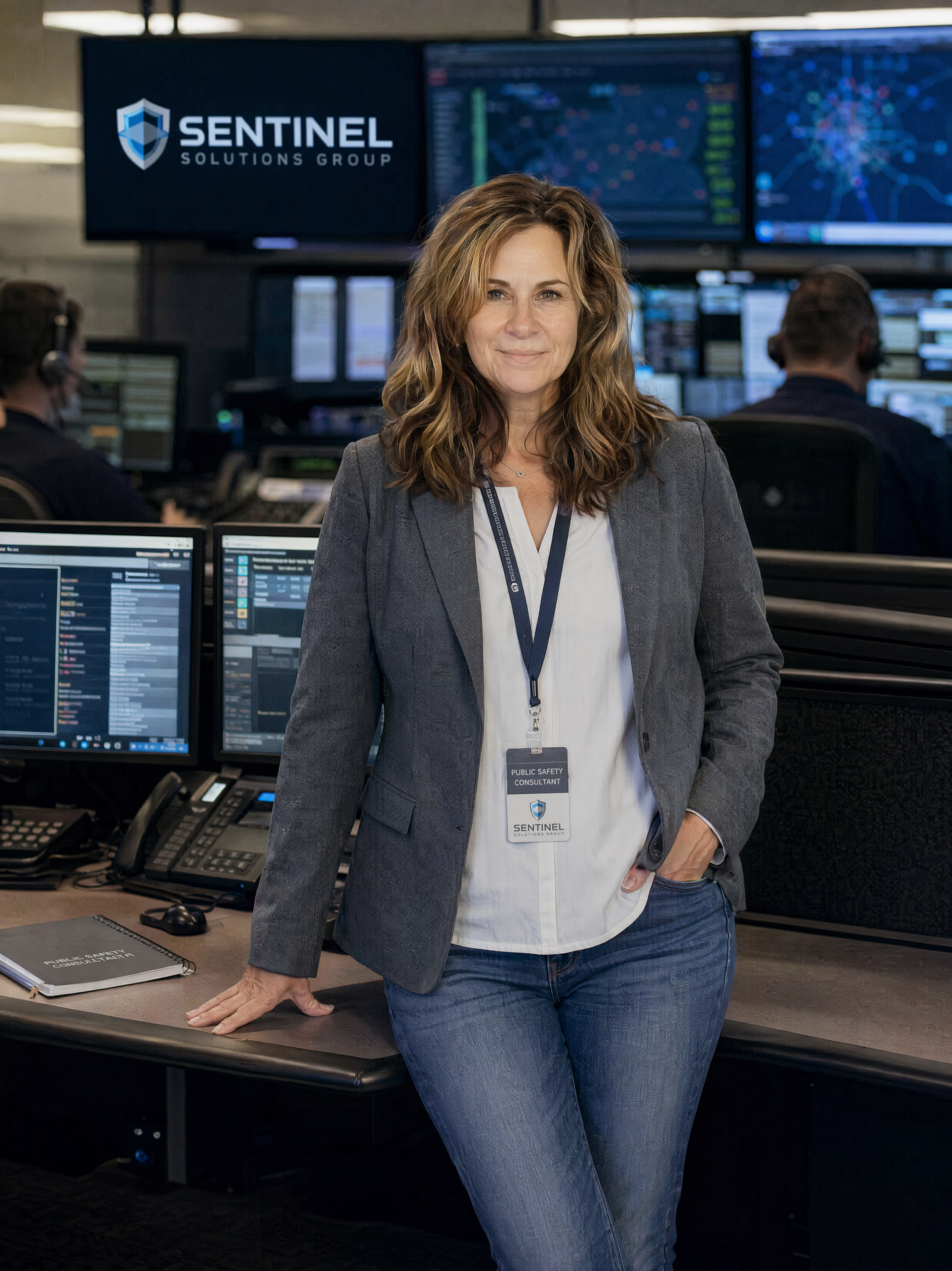
Kendra Branson

Kendra Branson

Advisor · Procurement, Contracts, Compliance

Brings hands-on local-and-state government project experience, federal grant compliance fluency, and the procurement-and-contracts discipline that turns a vendor pitch into a defensible procurement file. Kendra reviews every state agency engagement's procurement posture before Sentinel signs off on a recommendation.

Independent. Practitioner-led. Vendor-neutral.
How We Work Together

Four ways to bring Sentinel into a state agency program.

The right engagement depends on where the agency is in the program lifecycle. Each tier has its own scope discipline and its own deliverable cadence.

Sentinel Sustain

Managed Technology Subscription

End-to-end managed operations for the platforms Sentinel helped you stand up. Sustainment, on-site systems administration, vendor coordination, version-upgrade discipline, and 24/7 incident response. The system is still delivering the outcomes promised three years out, because someone is still accountable for it.

Sentinel Guardian

Retained Governance & Advisory

Ongoing retainer with quarterly governance reviews, pre-decision advisory, and an open line for legislative testimony, audit response, and vendor escalations. The agency has independent counsel on the technology side of the table, every cycle.

Practice-Led Engagement

Anchored to one of the four signature practices

Anchored to one of SDF, SRM, SDB, or SVA. Best when the agency knows which discipline is needed: program delivery, change readiness, configuration authority, or post-deployment outcome governance. Fixed scope, named practice, defined deliverables.

The Integrated Package

Specialized Services + Practice + Institute

A specialized service plus a signature practice plus Sentinel Institute training, packaged as a single integrated engagement. For agencies standing up a new program from scratch and building the institutional capacity to run it themselves.

Ready to talk about your state agency's technology program?

Tell us where you are in the program lifecycle, and we will tell you honestly whether Sentinel is the right fit, or recommend someone better if we are not.

Schedule a Conversation →