PUBLIC SAFETY · EMS
Independent technology advisory, vendor-neutral procurement, and managed services for the providers who arrive first.
THE MISSION
EMS agencies nationwide
EMS professionals serving communities
Average Rural EMS Response Time
CHALLENGE
Generic managed service providers often do not understand why ePCR latency matters at the bedside, why NEMSIS validation failures block state submission, why HIE handoff integrity affects clinical outcomes, or why CAD-to-ePCR linkage is operationally existential. Sentinel does. Our service model is structured around these realities, not adapted from a corporate IT playbook. Most EMS agencies also lack the internal bandwidth to independently manage complex technology programs on top of daily operations. Vendors fill the void, but vendor-driven decisions rarely serve the agency’s long-term clinical and fiscal interests. Sentinel provides the independent governance layer that changes this dynamic.
THE EMS REALITY
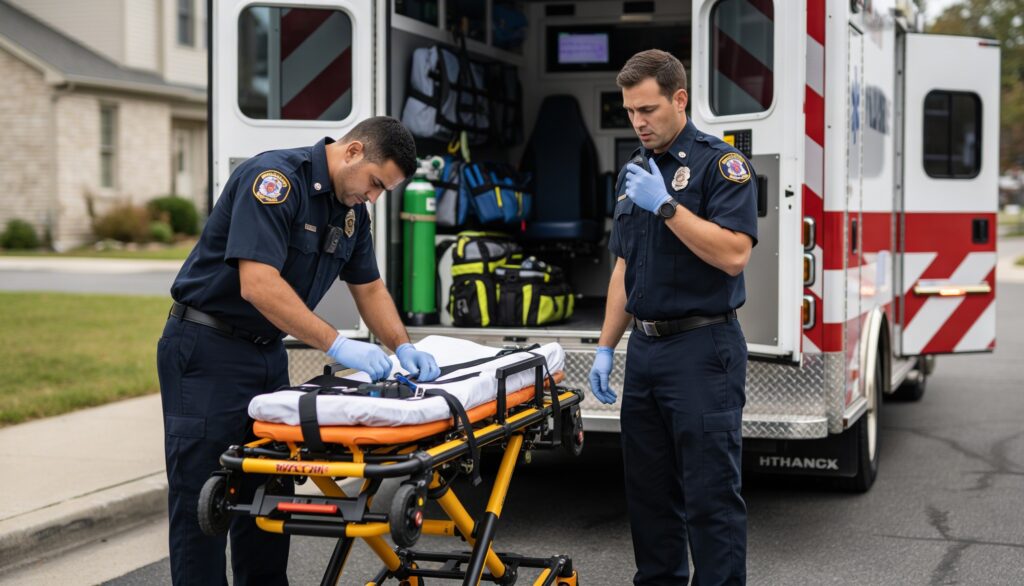
More than 21,000 EMS agencies and over one million EMS professionals carry the clinical mission across the United States, and the quality of that mission depends on where the patient happens to live. Urban response times cluster around six to seven minutes. Rural response times run more than twice as long, with the national rural median around seventeen minutes from 911 dial to on-scene, long enough to change outcomes in cardiac arrest, stroke, and severe trauma. EMS agencies operate where clinical care, emergency response, and complex technology all meet on every shift: the ePCR has to satisfy NEMSIS, the CAD has to route the right unit, the AVL has to shave seconds off response, billing has to pass audit, the HIE has to hand the record off cleanly, and the workforce has to keep showing up.
Sentinel Solutions Group brings people who have ridden the rig, written the chart, and built the platform to the same table, so the systems you invest in actually do what the field needs, not what the vendor wants to sell.
CHALLENGE
THE CHALLENGES
EMS leaders are being asked to do more than ever, with fewer people, aging systems, and rising clinical complexity. These are the pressures we help agencies navigate.
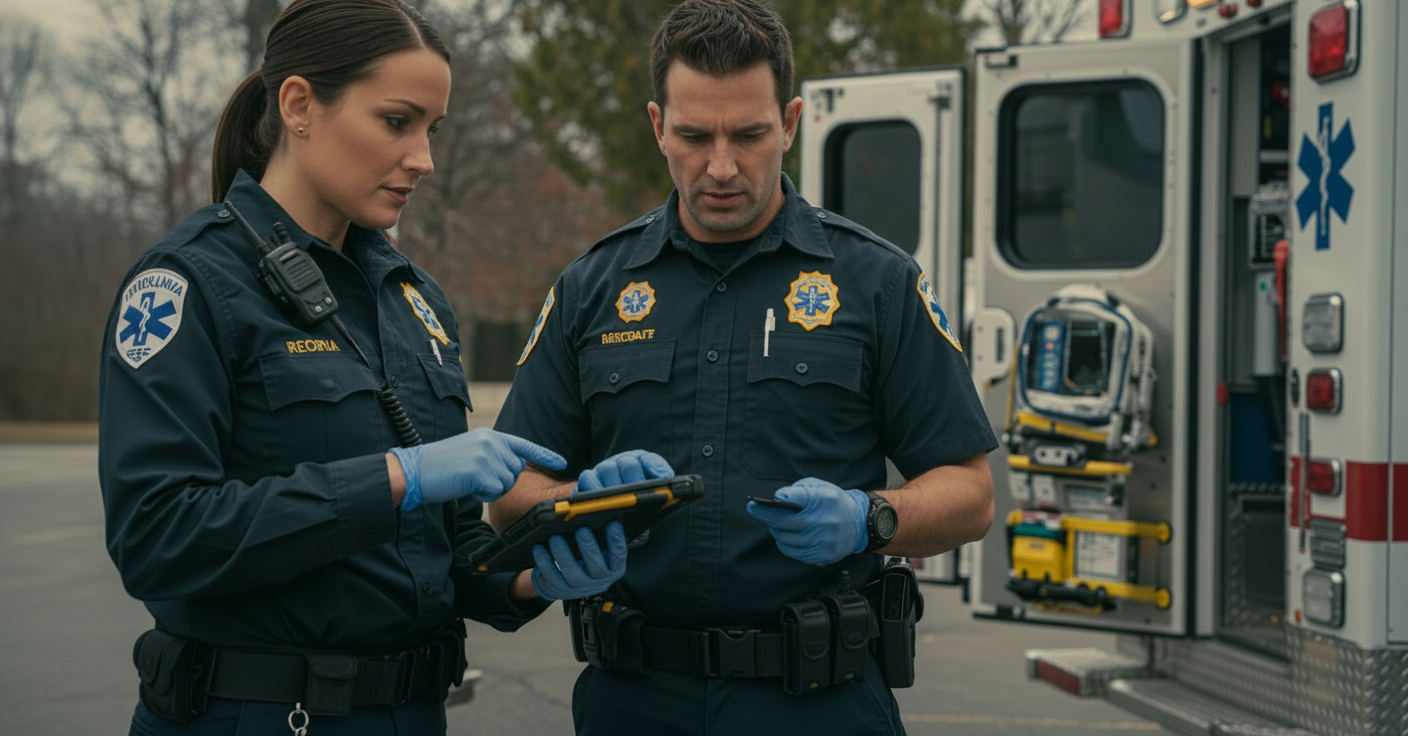
Most consultants come from one world. Sentinel was built by practitioners who have ridden the rig, written the patient care report, and engineered the platforms the industry runs on (and sold and deployed the very systems our clients now use. That combined perspective means we recognize the traps before they close) and we know exactly how to negotiate, architect, and govern the decisions that follow.
OUR APPROACH
Most consultancies frame the work as picking the right vendor. Sentinel frames it as governing the EMS technology program, not the platform. The vendors come and go. The contracts get rewritten. The audit cycle never stops. Someone needs to be accountable to the EMS agency, not to the next sales target.
That is the work Sentinel does. We sit on the EMS agency side of the table, every meeting, every decision, every cycle. No resale margin. No referral fees. No commissions on the contracts we recommend. The only loyalty is to the operation.
We govern the program. We never sell the platforms.
The ePCR is the chart, the bill, the federal report, and the QA record at once. The hospital expects the data on arrival. The state expects the submission on schedule. The payer expects the documentation in the format. These are the forces shaping how EMS technology decisions get made.
Electronic patient care reporting now sits at the intersection of clinical documentation, federal reporting, and reimbursement. CMS and Medicaid documentation requirements continue to tighten, and the data captured at the patient side determines what gets paid weeks later.
Sentinel implication: A configuration decision on the ePCR is a billing decision. The vendor that ships a clinical workflow without the billing lens is the vendor that produces a denial pattern the agency cannot trace.
Source: CMS ambulance billing and documentation requirements; NEMSIS Data Dictionary; NAEMT documentation standards
Health Information Exchange integration between EMS and receiving hospitals is increasingly mandated by state EMS authorities, with the ONC interoperability framework establishing the baseline. The handoff is no longer a verbal report and a paper trip-sheet; it is a structured data flow that the receiving hospital expects to ingest.
Sentinel implication: An EMS agency without an HIE-capable ePCR is operating outside the interoperability standard the hospitals are now scoring against. The data flow decision precedes the ePCR decision.
Source: ONC interoperability framework / TEFCA; NHTSA Office of EMS HIE guidance; NEMSIS v3.5 data flow standards
CMS retired the ET3 demonstration but the underlying value-based pressure persists, with payers and Medicaid programs continuing to push toward treat-in-place, alternative destination, and outcome-based reimbursement structures. The data infrastructure required to document outcomes is non-trivial.
Sentinel implication: An EMS agency that cannot document outcomes cannot participate in outcome-based reimbursement. The data infrastructure decision today determines reimbursement eligibility three years from now.
Source: CMS Center for Medicare & Medicaid Innovation (CMMI) ET3 demonstration final report; NHTSA Office of EMS guidance on community paramedicine
NEMSIS v3.5 has expanded the data dictionary, the validation rules have hardened, and the National EMS Database is increasingly used for federal grant scoring, public health surveillance, and policy analysis. State EMS offices now flag data quality issues at the agency level.
Sentinel implication: A configuration decision on what fields are required, validated, and submitted is a federal-reporting decision. The agency that lets the vendor pick its own data quality rules will see the consequences in state EMS office feedback and grant eligibility.
Source: NEMSIS Technical Assistance Center; NHTSA Office of EMS data quality program
Sustained EMT and paramedic workforce shortages have driven adoption of alternative deployment models including peak-load staffing, dynamic deployment, mobile integrated health, and AI-augmented dispatch. NAEMT and NHTSA have documented the workforce strain, and the technology decisions follow.
Sentinel implication: The CAD and resource-management decisions an agency makes today determine whether its deployment model can flex to the staffing reality. A static system locks in a staffing assumption that may not survive the next budget cycle.
Source: NAEMT EMS Workforce reports; NHTSA Office of EMS workforce strategy publications
CORE CAPABILITIES
Every engagement is anchored in six disciplines that protect agencies from bad decisions, bad contracts, and bad outcomes.
EMS systems stretch from dispatch all the way to billing and quality assurance. Most advisors stop halfway. We don't. This signature shows our footprint across the full patient-journey stack.
Four ongoing services built for the EMS operation, where documentation is evidence, deployment is math, and offload delay is the problem nobody owns. Clinical documentation tuned for defensibility and system-status management modeled against the data your ambulances already produce.
Ongoing support for patient care reporting systems, including configuration, optimization, and field-user training.
Review of EMS documentation to reduce legal exposure and improve report quality and reimbursement posture.
Ambulance deployment modeling to improve response times, posting strategy, and unit-hour efficiency.
Workflow improvements between EMS and hospitals to reduce wall time and restore ambulance availability.
OUR PRACTICES
Every Sentinel engagement is governed by proprietary practices built for the realities of EMS technology, from ePCR to fleet to clinical QA, not borrowed from commercial IT playbooks.
PROGRAM MANAGEMENT
How we govern programs.
PMP-disciplined program governance structured for political visibility, audit defensibility, and multi-administration continuity. Every milestone, deliverable, and decision gate is designed for the public-sector reality, where council turnover, budget cycles, and federal funding rules shape the timeline more than any vendor’s project plan.
CHANGE MANAGEMENT
How we prepare your people.
Organizational change management built for the rig, the squad bay, and the medical director's office, not the corporate campus. We design adoption strategies informed by shift schedules, union dynamics, civil service rules, and the operational reality that your systems cannot go dark for training. When the new ePCR goes live, the crews on the rigs are ready.
CONFIGURATION AUTHORITY
How we own the configuration.
Configuration authority for ePCR deployments, NEMSIS compliance configuration, and revenue cycle integration. Sentinel owns the foundational decisions that shape chart completion, clinical workflows, billing capture, and reporting posture, producing the Blueprint, training, and administrator documentation that protects both the patient record and the agency’s reimbursement position.
VALUE ASSURANCE
How we prove the value.
Post-deployment governance for your ePCR, dispatch-to-transport integration, and billing platform investment. Sentinel independently measures whether documentation compliance, billing cycle health, and care-in-transit outcomes specified at procurement are being realized. Findings defend the investment to medical directors, oversight, and renewal committees.
After engagement closes, Sentinel Sustain keeps the practice active across the life of the investment. Three tiers: Core, Active, and Strategic.
Learn more →Four practices, applied to one operating environment: the field unit, the ePCR, the hospital handoff, the billing queue, and the NEMSIS submission. Each practice carries a specific scope and a specific deliverable cadence.
On an ePCR migration, hospital-handoff data flow rollout, or NEMSIS v3.5 alignment program, SDF runs the phase plan, the gate reviews, and the vendor accountability cadence. The agency director sees a defensible program record at every board update, and a documented audit trail at every state EMS office review. SDF holds the program steady through medical-director transitions, billing vendor changes, and the inevitable mid-deployment surprise.
When an agency deploys a new ePCR, integrates with hospital HIE, or shifts deployment models, SRM prepares the workforce for what changes and what stays the same. Field provider workflow analysis, QA staff enablement, billing process revisions, and the post-go-live support cadence are scoped against operational reality and reimbursement implications.
During ePCR deployment, HIE integration, or billing system reconfiguration, SDB is the practitioner-delivered configuration authority that sits on the agency's side of the table. NEMSIS data field validation rules, hospital handoff data flow, billing-clearinghouse integration, QA review thresholds, and the technical decisions vendors typically push back on are documented with the agency's answer in the room. SDB is delivered by Sentinel practitioners. It is not offered as training.
Twelve, twenty-four, and thirty-six months after deployment, SVA reviews whether the system is performing to the documented intent: NEMSIS data quality, denial pattern, hospital handoff success rate, and configuration drift the agency did not see at procurement time. The findings are advisory and non-binding by design. Sentinel documents. We do not litigate. No legal representation. No expert witness role. SVA is delivered by Sentinel practitioners. It is not offered as training.
DEEP EXPERTISE
These are the specific platforms, standards, protocols, and operational disciplines we work in every day.
WE KNOW THE TRICKS OF THE TRADE
These are the traps that consume budgets, derail timelines, and leave agencies stuck with systems that do not serve them. We have seen them firsthand, and we know exactly how to neutralize them.
01
02
03
04
05
06
WHO YOU ARE WORKING WITH

MANAGING PARTNER · ENGINEERING & TECHNOLOGY

FIRE SERVICE, EMS & TRAINING ADVISOR
PRINCIPAL ADVISOR · FIRE & EMS OPERATIONS
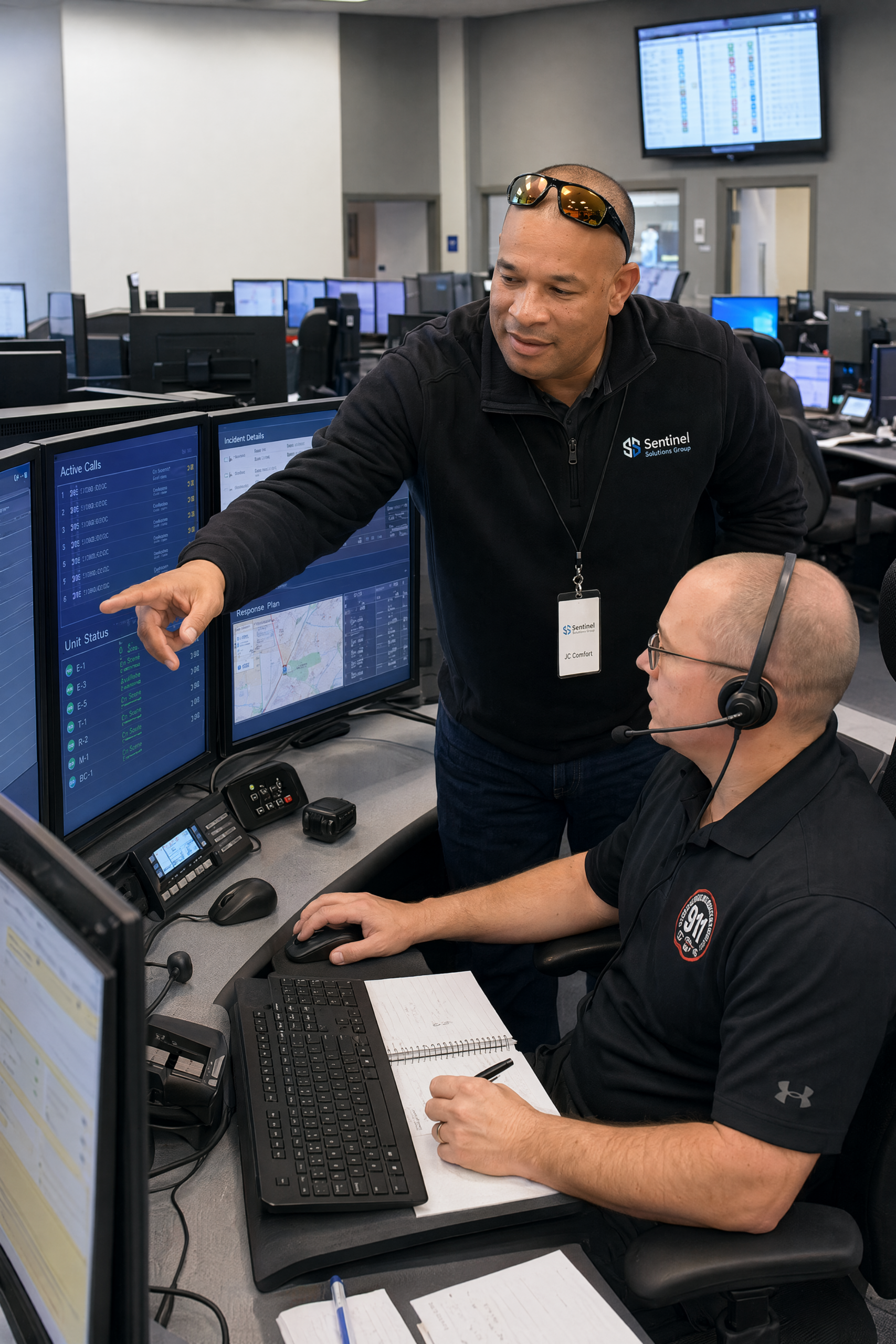
Decorated firefighter and paramedic with nearly twenty-five years on the box and the apparatus floor across Colorado fire and emergency services. Honor Guard member and Firefighter of the Year, holding paramedic, ACLS, PALS, and incident-command credentials. JC keeps every EMS technology recommendation grounded in the clinical and field realities of how crews actually run calls.

NURSING ADMINISTRATION · HEALTHCARE OPERATIONS
The right engagement depends on where the EMS agency is in the program lifecycle. Each tier has its own scope discipline and its own deliverable cadence.
End-to-end managed operations for the ePCR, CAD, biller integration, and field-mobility infrastructure Sentinel helped you deploy. Sustainment, vendor coordination, HIPAA-aware version-upgrade discipline, and 24/7 incident response. The chart is still defensible at the next QA review, because someone is still accountable for the data flow.
We govern the program. We never sell the platforms.
Read moreOngoing retainer with quarterly governance reviews, pre-decision advisory, and an open line for medical-director coordination, billing compliance, and vendor escalations. The agency has independent counsel on the technology side of the table, every reimbursement cycle and every audit.
Sentinel documents. We do not litigate.
Read moreAnchored to one of SDF, SRM, SDB, or SVA. Best when the agency knows which discipline is needed: an ePCR migration, hospital-handoff workflow change readiness, configuration authority on QA-cleared data flow, or post-deployment outcome governance. Fixed scope, named practice, defined deliverables.
Independent. Practitioner-led. Vendor-neutral.
Explore subscriptionsA specialized service plus a signature practice plus Sentinel Institute training, packaged as a single integrated engagement. For agencies standing up a new EMS technology stack from scratch and building the institutional capacity to run it without rebuilding it again in three years.
Cutting-edge. Never bleeding-edge.
Read moreTemplates, Tools, and Office Hours
Low-touch entry tier. Sentinel templates, tools, reference materials, and scheduled office hours. The agency runs its own program; Sentinel provides the assets and answers the questions when they come up. No retainer, no embedded staff, no committed scope.
Best when: The agency wants Sentinel's templates and judgment but is not ready to engage a subscription. A starting point that can scale up if the program grows.
Built for the agency. Sized for the start.
Read more about Standard Access →Most EMS agencies run multiple technology programs at once. Sentinel work in EMS work typically pairs with one or more of these companion disciplines, where the same governance discipline applies.
Fire-based EMS shares ePCR, dispatch, and apparatus telemetry with the fire side.
Hospital handoff data flow is a regulatory expectation, with HIE integration as the baseline.
The EMS-to-ED handoff is a structured data flow that determines documentation quality.
Deployment studies, the funding behind the units, and where crisis response is heading.
A thirty-minute conversation about your program, your timing, and what is actually going to get used. Then we will recommend an engagement, a subscription, or no action at all. Whatever the EMS agency actually needs.
Schedule a conversation