WHO WE SERVE · EDUCATION · HIGHER EDUCATION
Independent program governance for the multi-year ERP, SIS, and research IT modernization programs that span multiple budget cycles, multiple administration tenures, and the difference between an institution that runs the program and an institution the program runs.
THE HIGHER ED REALITY
Higher education ERP and SIS modernization programs run 3 to 5 years and 25 to 200 million dollars at major institutions. They span multiple academic years, multiple fiscal years, multiple federal financial aid years, and almost always multiple presidents, provosts, and CIOs. Most institutions enter these programs without a governance discipline that can hold across the multi-year arc. Sentinel governs alongside the implementation, independent of the implementor, for the full duration.
4K+
degree-granting institutions in the United States across community college, regional comprehensive, flagship, and private categories
3-5 yr
typical duration of an ERP modernization program from selection through stabilization
$200M
typical total cost of ownership for an ERP modernization at a major research institution
2
presidents on average who serve during a single ERP modernization program at a flagship institution
CHALLENGE
Most higher education ERP and SIS modernization programs are governed by the implementation partner. Big 4 firm, Workday certified partner, Oracle implementation partner. The implementation partner has every incentive to deliver against the contracted scope, complete the phase gates, and exit. The institution has every incentive to come out of the multi-year program with a working enterprise stack, defensible decision records, and a budget that survives the next fiscal cycle. Those incentives diverge predictably. Sentinel sits on the institution’s side of the table, independent of every implementor, governing the institution’s interest across the multi-year arc.
THE PRESSURES
These are the structural pressures we hear from CIOs, vice presidents of administrative computing, research IT directors, and program executive sponsors at flagship universities, regional comprehensives, and community college systems. Sentinel’s role is to help your institution navigate them with documentation that survives board scrutiny, faculty senate inquiry, and the multi-year arc.
Ellucian is consolidating development around the cloud product. Institutions still on on-premise Banner face a multi-year evaluation: Ellucian Cloud, Workday Student, Oracle Cloud, or alternative paths. Each path has a 3 to 5 year program ahead of it. Institutions that wait for the path to clarify are watching their migration window narrow.
Oracle Cloud is the natural migration path. Some institutions evaluate Workday for HCM-only or for full suite. Either way, the institution is committing to a 3-to-5 year program with multi-million-dollar TCO. The decision deserves better governance than most institutions have built.
USC, Penn State, and several state systems have publicly acknowledged challenging implementations. The pattern: the institution underestimates the configuration discipline required, the implementation partner delivers against contracted scope while the operational reality drifts, and the institution emerges stabilized but with technical debt the implementation partner does not own. Sentinel’s role is to govern alongside the implementation, surfacing the operational reality before it becomes legacy debt.
NIST 800-171 r3 transition affects research institutions doing DoD-funded research. CMMC governs DoD prime and subcontract research. Parallel CUI handling requirements from other federal agencies are emerging. R1 institutions are establishing CUI enclaves; many are still scoping the work. The compliance discipline is the same one Sentinel applies in the DIB.
A 3-to-5 year program at a flagship will see one to two presidents, two provosts, multiple CIOs, and at least one major budget reset. The governance discipline either holds across leadership transitions or the program drifts. Sentinel governs the program, not the leadership; the discipline is the constant.
Workday Adaptive, Oracle Analytics, Ellucian Insights. Each platform is layering AI capabilities into the modernization story. Institutions are evaluating these against their existing analytics maturity, their data governance posture, and the recurring cost implications. The decisions deserve independent review, not vendor-pushed enthusiasm.

OUR APPROACH
Sentinel's higher education approach is built on four principles. Each reflects the operational reality that university technology programs are not corporate IT programs. They are multi-stakeholder programs serving students, faculty, staff, board, accreditors, and federal regulators simultaneously, on procurement timelines and budgets that move with state legislatures and bond markets.
Sentinel does not implement Workday, Oracle Cloud, Ellucian Cloud, or any other ERP or SIS platform. We do not partner with the implementation firms for revenue. We govern alongside them. Independence between governance and implementation protects the institution’s interest.
Decision records, vendor performance documentation, change-management governance, and risk register management retained at a grade that holds through change of CIO, change of provost, change of president. The institutional memory of the program lives in the documentation, not in any individual’s head.
Higher-ed program governance has to honor academic year start and end, fiscal year cycles, federal financial aid years, and faculty senate review windows. Sentinel’s phase-gate discipline is built around the actual operational rhythm of the institution.
Our governance work documents what we find and surfaces evidence. It does not become a party to disputes between the institution and the implementation partner, between the institution and the platform vendor, between the institution and faculty senate. Sentinel documents, never litigates.
CORE CAPABILITIES
Every engagement is anchored in six disciplines that protect the institution from program drift, weak documentation, and the post-go-live accountability gap that follows a 100-million-dollar modernization.
Independent oversight of the multi-year program from selection through stabilization. Phase gates aligned to institutional cycles. Decision records that survive change of leadership.
Documented adequacy review for ERP, HCM, Finance, SIS, IDM, analytics, and every other technology decision the modernization requires. We do not resell any of them.
Documentation grade carried over from public-safety, government, and DIB compliance environments. Institutional records that survive board scrutiny, faculty senate inquiry, and federal audit.
Translating design intent into platform configuration across academic, administrative, and auxiliary modules. The team that owns is-this-how-the-data-classification-should-actually-behave decisions when the implementation partner and the institutional CISO are not aligned.
CUI scope identification, enclave architecture review, body-of-evidence build, faculty researcher training, and ongoing compliance program governance. Cross-domain pedigree from the DIB transfers cleanly.
Documenting whether the implemented systems are operating as designed in the months after go-live. Critical for the long arc of stabilization and the post-implementation accountability question that institutions face.
Most higher-ed consultancies are organized around a single phase: selection consulting, implementation, optimization. Sentinel positions around the program as a whole, with the four practices as the load-bearing structure that holds across phase gates, leadership transitions, and the multi-year arc.
The program runs for years. We run alongside it.
Each addresses a specific phase of the multi-year program. All are governed by the SVA standard: findings advisory, non-binding, structured for institutional records that survive board scrutiny and faculty senate inquiry.
Multi-quarter retainer-based engagement governing a higher-ed ERP modernization program (Banner-to-Workday, PeopleSoft-to-Oracle Cloud, or comparable). Independent of the implementation partner. Includes phase-gate review, decision-record discipline, vendor performance documentation, change-management governance, and risk register management. Output: institutional leadership has an independent voice in the room across the multi-year program.
A targeted engagement helping research institutions scope and govern CUI handling for federally-funded research. Maps directly to Sentinel’s D3 Defense Contractors capability set. Includes CUI scope identification, enclave architecture review, body-of-evidence build, faculty researcher training, and ongoing compliance program governance. Cross-domain compliance fluency from DIB and CJIS work transfers cleanly.
Multi-quarter program governance for identity and access management modernization at higher-ed scale. Covers federation strategy (Shibboleth, SAML, OIDC), role lifecycle for students, faculty, staff, and alumni, SSO consolidation, multi-factor rollout, and IDaaS evaluation (Okta, Microsoft Entra, Ping). Independent of any IDaaS vendor; documents the buyer’s interest in vendor selection.
OUR PRACTICES
Every Sentinel engagement draws on the practices that match the program’s stage. We bring them in proportionally; we never sell the whole stack when only part of it earns its keep.
PROGRAM MANAGEMENT
How we govern your program.
Program execution discipline for higher education ERP and SIS modernization across multi-year, multi-phase capital programs. Phase gates that survive Provost and CIO transitions, governance committee turnover, and shifting board priorities. Decision logs that survive faculty senate scrutiny, accreditor reviews, and state higher-ed system inquiries.
CHANGE MANAGEMENT
How we prepare your operators.
Operator readiness for new higher-ed technology cutovers across institutions. Banner-to-Workday transition training, PeopleSoft sunset planning, Ellucian Cloud rollouts, and research IT system go-lives. The change rhythms that determine whether the new ERP or SIS actually works the morning registration opens.
CONFIGURATION AUTHORITY
How we own the configuration.
Configuration authority for the higher-ed enterprise stack. Translating institution-specific business rules into platform configuration. The team that owns “is this how the system should behave when a student declares a second major mid-term?” decisions across SIS, ERP, LMS, identity, and research administration systems.
VALUE ASSURANCE
How we prove the mission outcome.
Independent governance documenting whether the institution’s modernization investments are delivering operational outcomes: registration cycle integrity, financial aid accuracy, time-to-conferral metrics, accreditor evidence readiness, and audit posture. Findings advisory and non-binding. Critical for board updates, accreditor submissions, and faculty senate transparency.
After engagement closes, Sentinel Sustain keeps the practice active across the life of the investment. Three tiers: Core, Active, and Strategic.
Learn more →DEEP EXPERTISE
Sentinel’s higher-ed bench is rooted in cross-domain compliance fluency, audit-grade documentation discipline, and the multi-system program governance experience that bridges ERP, SIS, HCM, and identity environments. The higher-ed-specific advisor bench is in flight; the firm-level governance discipline is operational today.
WE KNOW THE TRICKS
The higher-ed ERP and SIS vendor playbook is well-rehearsed. Implementation partners run the same plays at flagship after flagship. Here is what we look for, before the contract is signed.
01
Implementation partner tours the institution to selected reference customers who completed the implementation cleanly. The tour omits the institutions where the implementation was rocky, the institutions that re-implemented after the partner exited, and the institutions where the implementation finished but the operational reality drifted. We require an unfiltered reference list including the partner’s most challenging projects, before the contract is signed.
02
Vendor and implementation partner promote configuration over customization, framing customization as expensive and dangerous. The reality is that some institutional realities require customization, and the configuration-only approach forces the institution to bend to the platform. We map institutional reality against platform capability before the design is locked.
03
Implementation partner sells the program at attractive total cost; the recurring SaaS cost from the platform vendor is back-loaded. Years one and two look like the program forecast. Year three, when the SaaS cost reaches steady state, the institution faces the budget reality. We model TCO across the full 5-year window before the program is approved.
04
Implementation partner reports green status on phase gates while the operational readiness drifts. By the time go-live arrives, the cascade of compromises is irreversible. We govern the phase gates with operational reality as the criterion, not contractual deliverable as the criterion.
05
Implementation partner exits at go-live; the institution enters “stabilization” for a vague duration. The stabilization period stretches; the institution accumulates technical debt; the partner’s exit complete. We define stabilization as a bounded, governed phase with explicit exit criteria, before the contract is signed.
WHO YOU ARE WORKING WITH
The people on the other side of every Sentinel higher-ed engagement combine state-government technology pedigree with multi-system program governance discipline. Where the discipline-specific advisor bench has gaps, we name them, and we name what is in flight.
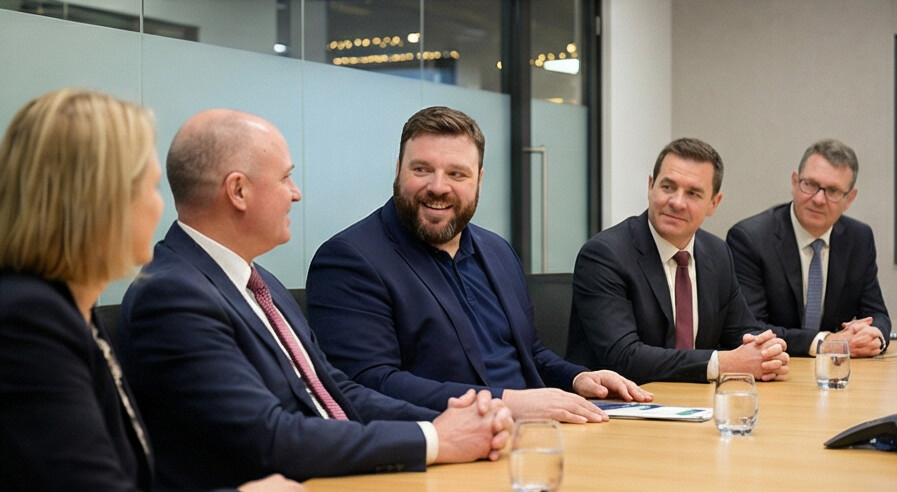
Justin co-founded Sentinel after a career in state-government technology governance and emergency-response coordination. The cross-jurisdictional documentation discipline he applies to higher-ed ERP and SIS modernization governance is the same discipline he applied to systems where every record was discoverable the day it was created.
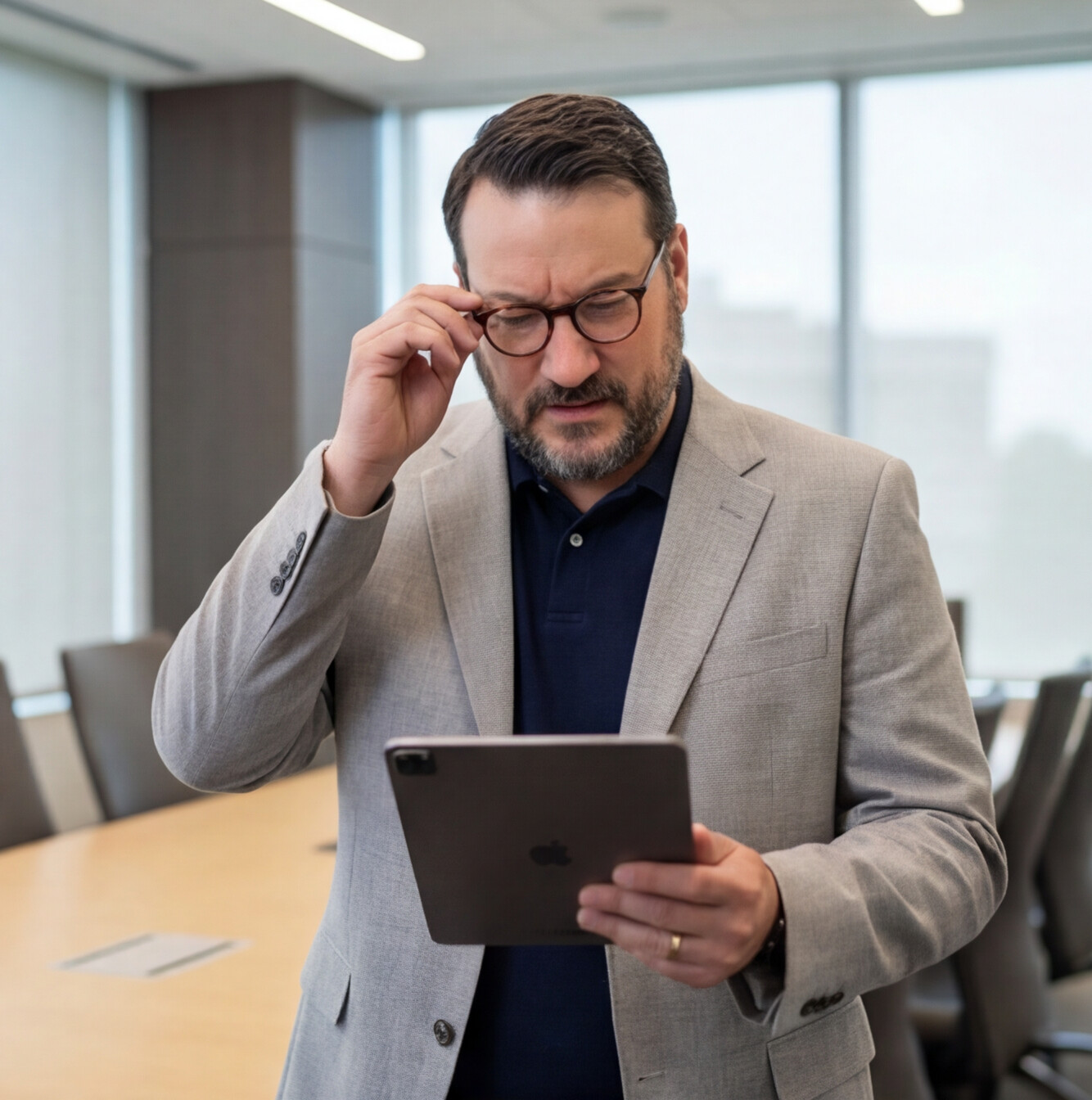
Jason co-founded Sentinel after sitting on every side of the technology-program table. Vendor, integrator, program office, operator. His practitioner-grade perspective on multi-system program governance is what shaped Sentinel’s vendor-neutral standard. The pedigree applies cleanly to the multi-year ERP and SIS modernization arc.
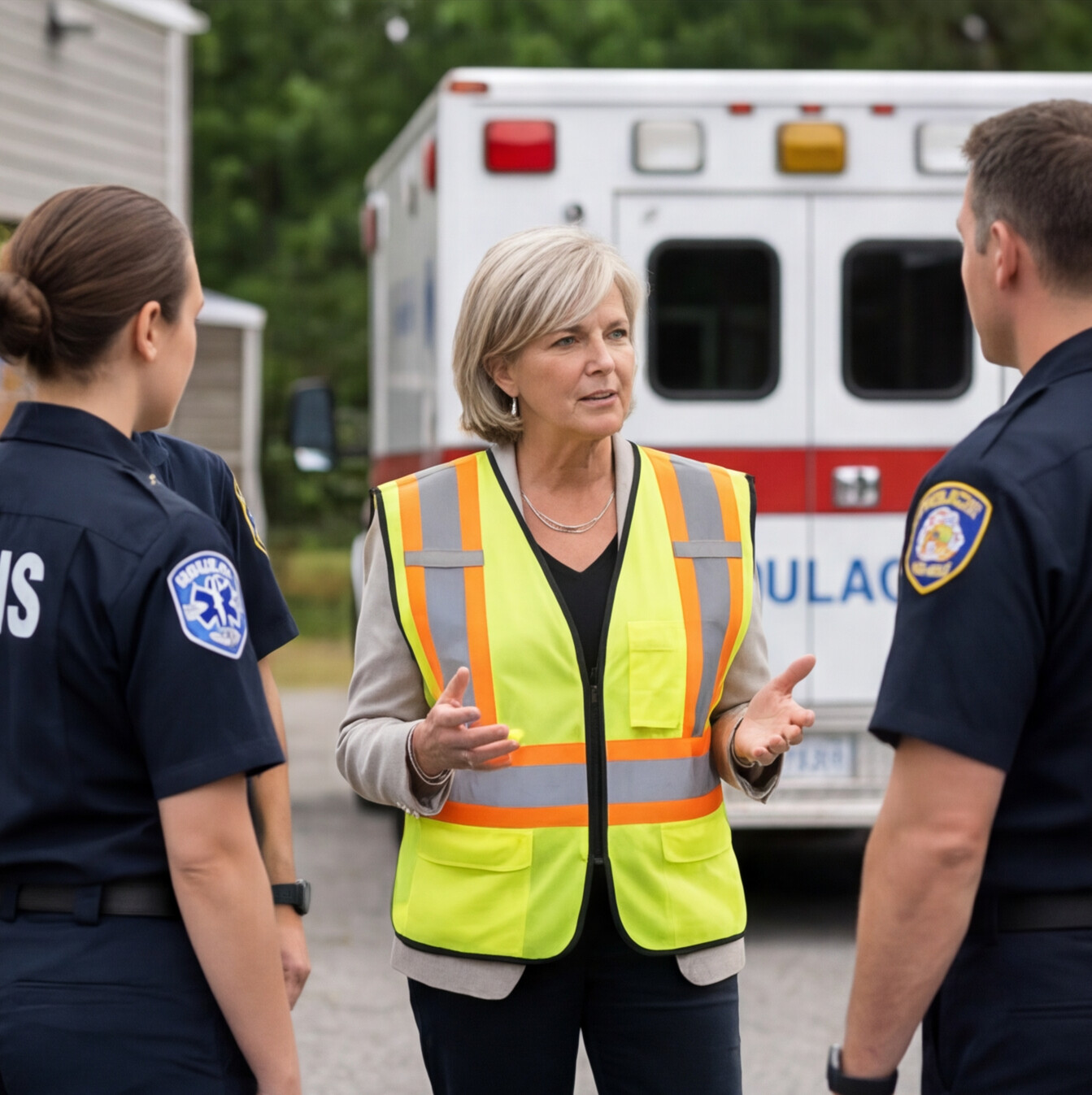
24+ years in public education administration and 15 years as Grants Manager for Bridgeport Public Schools, where she has secured more than $20M in federal, state, and private funding. Currently serves as elected Mayor of Bridgeport, Nebraska. Brings frontline governance, grant-funding, and community-leadership experience to every Sentinel education engagement.
Also Supporting Your Program
The right engagement depends on where your institution is in the program lifecycle, what your existing IT bench looks like, and which higher-ed pressure is creating the most friction. Each subscription has a clear scope, deliverable structure, and exit point. Subscriptions stack.
Managed Technology Subscription
End-to-end managed operations for the modernization platforms Sentinel helped your institution stand up. Sustainment, on-site systems administration, vendor coordination, version-upgrade discipline, and 24/7 incident response. The ERP, IDM, or research IT stack is still delivering against the modernization business case three years out, because someone is still accountable for it.
The institution needs ongoing operations of a Sentinel-deployed platform; faculty, student, and research services depend on continuous availability; or the program runs across multiple presidents, provosts, or CIOs.
We govern the operation. We never sell the platforms.
Read more about Sustain →Retained Governance & Advisory
Ongoing retainer with quarterly governance reviews, pre-decision advisory, and an open line for board and senate briefings, audit response, and vendor escalations. The institution has independent counsel on the technology side of the table, every cycle.
The institution has a multi-year ERP or research IT modernization; the cost of a misstep is research compliance exposure, audit finding, or accreditation impact; or board and senate cycles are continuously in motion.
Sentinel documents. We do not litigate.
Read more about Guardian →Anchored to a Signature Practice or Defined Deliverable
Anchored to one of SDF, SRM, SDB, or SVA, or to a single defined deliverable: ERP Modernization Program Governance, Research IT NIST 800-171/CUI Readiness, or Higher Ed IDM/SSO Modernization. Fixed scope, named practice or deliverable, defined timeline.
The institution knows the discipline or deliverable needed and wants a contained, scope-bounded engagement that produces a defensible institutional record before the next governance gate.
Independent. Practitioner-led. Vendor-neutral.
See how the practices apply →Specialized Services + Practice + Sentinel Institute
A specialized service plus a signature practice plus Sentinel Institute training combined into a tailored program. Best when the IT staff and program team need to learn the discipline as the discipline is being applied, particularly during ERP cutover or major research IT rebuild.
The institution is rebuilding a critical program from scratch and wants the institutional capacity to operate it across the next presidential cycle.
Cutting-edge. Never bleeding-edge.
See the Institute deep-dive →Templates, Tools, and Office Hours
Low-touch entry tier. Sentinel templates, tools, reference materials, and scheduled office hours. The agency runs its own program; Sentinel provides the assets and answers the questions when they come up. No retainer, no embedded staff, no committed scope.
Best when: The agency wants Sentinel's templates and judgment but is not ready to engage a subscription. A starting point that can scale up if the program grows.
Built for the agency. Sized for the start.
Read more about Standard Access →Modernization oversight, AI governance, and managed operations for higher education.
READY WHEN YOU ARE
Tell us where your institution is. Pre-selection, mid-implementation, post-go-live, or planning the next phase. We will tell you honestly whether Sentinel is the right fit. The conversation costs nothing. The decision costs less when an independent voice is in the room across the multi-year arc.