Four capability tracks. One accountable partner.
Governance, operations, project delivery, and specialized embedded services. Every track vendor-neutral, practitioner-led, and calibrated to the environment your agency actually runs.
One firm. Four tracks. Calibrated to the work.
Every Sentinel engagement maps to one or more of these four tracks. They are designed to layer, not replace each other. Agencies start in one and expand as the work reveals itself.
Strategic Governance & Oversight
Independent leadership for your most critical technology decisions.
- Technology governance framework development
- Vendor evaluation and contract oversight
- Program audits and independent assessments
- Executive advisory and interim CTO/CIO services
- Risk and compliance alignment
Managed Technology Services
End-to-end operations for the technology your agency cannot afford to lose.
- Infrastructure modernization and managed cloud
- Cybersecurity and CJIS compliance operations
- Mission-critical application operations
- Continuity and disaster recovery
Professional Services
Expert execution, deployed on your terms.
- Technology risk assessments
- Project and deployment services (SDF™-run)
- Strategic planning and roadmap development
- Compliance and audit readiness
- Incident response and recovery
- Staffing, workload, and schedule studies
- Grants strategy and administration
- Accreditation support
Specialized Services
Embedded expertise. Operational presence. Ongoing oversight.
- Sentinel Admin™, multi-platform CAD/RMS/Mobile/JMS administration
- Quality assurance and liability review programs
- Staffing optimization and schedule engineering
- Specialized training and certification tracks
- Logging recorder administration and compliance
- Sentinel Response™, ticket and support management with configurable SLAs
Independent governance for the technologies communities watch closest.
Five focus areas apply the same vendor-neutral oversight pattern to the programs under the most public scrutiny. We govern the program. We never sell the platforms.
A system is not done at cutover. That is when the risk begins.
Most firms organize around the purchase. Plan it, procure it, install it, leave. We work the whole arc, and we stay for the part that decides whether the investment was worth it.
The hard part was never buying the system. It is governing it, defending it to the public, and proving it worked.
Read the Insight: Past the Cutover →The seams are where deployments fail.
Modern public safety does not run on one system. It runs on an ecosystem: dispatch, records, video, radio, mobile, and the data that has to move between them. Most programs buy these as separate procurements, from separate vendors, with no one accountable for how they work together. We have built these ecosystems at the scale of an international airport and a major metropolitan county. We govern the seams.
Integration governed as one program
CAD, records, video, radio, and mobile managed as a single ecosystem with one accountable partner, not five disconnected vendor relationships.
Interoperability that survives the org chart
The data has to flow across agencies and systems on the worst day, not just in the demo. We design for the mutual-aid event, the multi-agency response, the day it actually matters.
Built by people who have done it
Airport-scale and county-scale public safety ecosystems, deployed and operated. This is not a framework borrowed from another industry. It is the work, applied.
A consultant who has run single-system procurements and a practitioner who has built integrated ecosystems are not the same thing. The difference shows up at the seams.
The systems that draw scrutiny need someone independent governing them.
Real-time crime centers. License plate readers. Automated enforcement. These programs rarely fail on technology. They fail on oversight, trust, and whether the agency can defend them to a council and a community. We govern that work, on your side of the table, with no stake in the platforms.
Real-Time Crime Centers
Oversight policy, audit protocols, data-retention governance, and the community trust that decides whether the center survives a records request and a council hearing.
Explore →Automated Enforcement & Safety Cameras
Transparent revenue accountability, independent oversight, and the community trust that keeps speed and red-light programs from dying at the ballot box.
Explore →While the phases move, Sentinel stays.
Most firms own one slice of the journey. Sentinel owns the whole engagement, from the first needs analysis conversation to the customer-success quarterly review five years later.
Before you buy anything.
- Needs Analysis
- Internal Business Review
- RFI / RFP Authorship
We know the vendor game.
- Vendor Selection
- Procurement
- Contracting & T&Cs
Between the ink and the go-live.
- Pre-Deployment
- Deployment
- End-User Training
The 72 hours that define it.
- Go-Live Readiness
- Go-Live
- Post Go-Live Stabilization
After the spotlight fades.
- Customer Success
- Ongoing Optimization
- Expansion & Evolution
Every phase backed by Sentinel intellectual property.
Sentinel Delivery Framework™ runs every deployment. Sentinel Readiness Method™ runs every rollout. Sentinel Deployment Blueprint™ runs every configuration. All three are taught in the Sentinel Institute and used on every Sentinel engagement, without exception.
Four practices. Used on every engagement. Two taught only by Sentinel.
Every Sentinel engagement runs on four proprietary practices built specifically for public safety, healthcare, and mission-critical environments. SDF and SRM are taught in the Sentinel Institute. SDB and SVA are delivered by Sentinel practitioners.
Sentinel Delivery Framework™
SDF™ · Public-sector program management methodologyPMI-disciplined delivery structured for public-sector visibility, audit defensibility, and multi-administration continuity. Milestone governance, risk registries, vendor accountability, decision logging, and the executive reporting cadence that keeps programs defensible before council, audit, and legal review.
Sentinel Readiness Method™
SRM™ · Public-sector organizational change managementChange management built for dispatch floors, patrol briefings, fire stations, and EOCs. Not corporate HR playbooks. Role-based readiness, training path design, shift-based communications cadence, and the adoption discipline that gets public safety staff to actually use the system they were issued.
Sentinel Deployment Blueprint™
SDB™ · Public-sector technology deployment methodologyConfiguration authority on the agency’s side of the table. Discovery and Decision Architecture, Configuration Authority, Validation and Transfer, and Post-Go-Live Stewardship. Produces the Blueprint, the Operational Training Curriculum, and the System Administrator Playbook. The practice that makes technology deployments actually deliver what the agency purchased.
Sentinel Value Assurance™
SVA™ · Post-deployment governance practiceSentinel’s answer to customer success. Independent measurement of realized value, documented vendor accountability, and structured recourse when outcomes fall short of the agreement. Turns procurement commitments into evidentiary records that survive administration changes, audits, and renewal decisions.
After engagement closes, Sentinel Sustain keeps the practice active across the life of the investment. Three tiers: Core, Active, and Strategic.
Learn more →Each capability track has an anchor Insight. The four below define how Sentinel governs, manages, executes, and embeds across the operational stack.
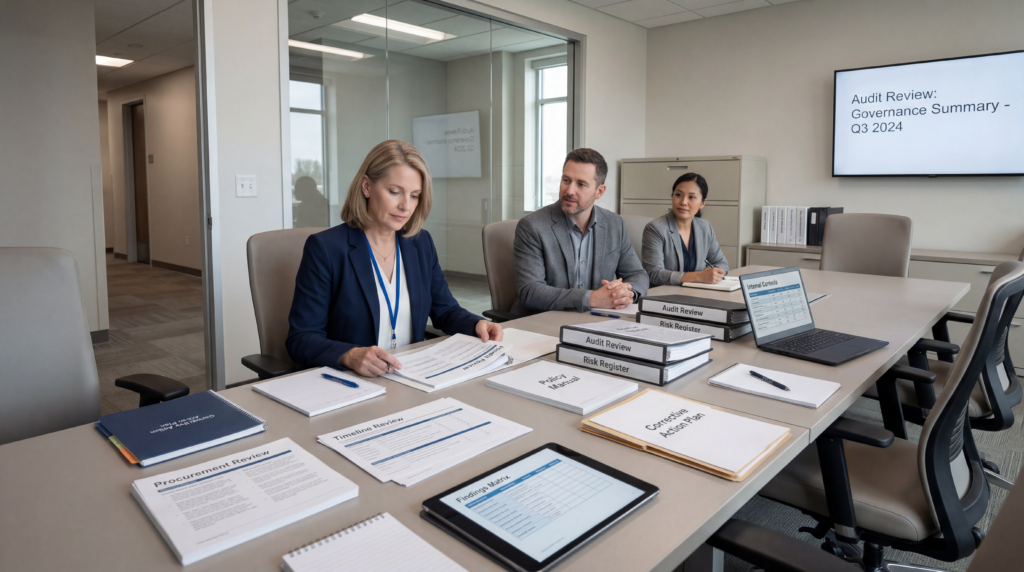
What an Inspector General Actually Reads in Your Procurement File
Judgment without documentation is opinion. Opinion does not survive an audit. What an inspector general reads in a procurement file rarely matches what the agency thought the file actually contained.
Read the Insight →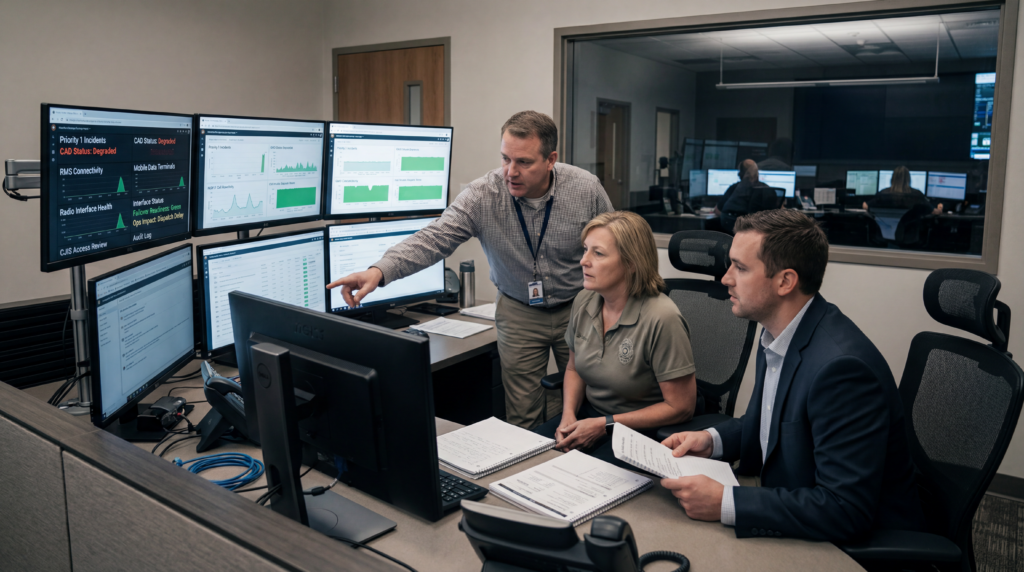
Why a Generic MSP Cannot Carry a Public Safety Agency
Public safety is not corporate IT with higher uptime. It is a different category of operation entirely. The agency that mistakes one for the other will pay the difference twice.
Read the Insight →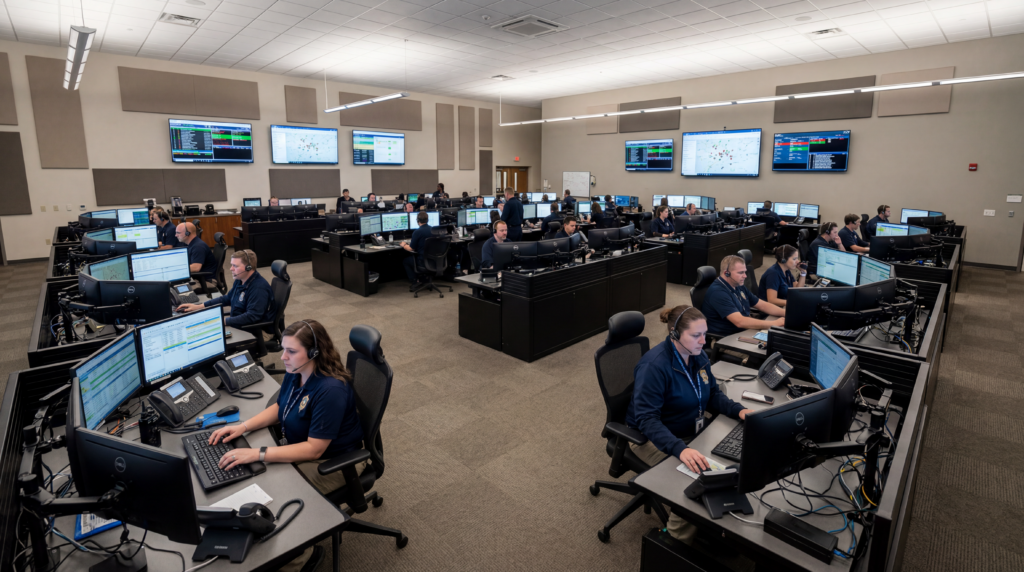
Why Most CAD Modernization Programs Fail Before They Start
Most CAD modernization failures are not caused by software. They are caused by an absence of governance, sequencing, and operational ownership long before the platform is ever selected.
Read the Insight →
The Bench Your Agency Cannot Build
Most agencies do not need one more person. They need a bench. The answer to the public safety technology bench problem is not headcount. It is a bench built differently.
Read the Insight →Sit down with someone on your side of the table.
A scoped thirty-minute conversation is all it takes to see where Sentinel can make the biggest difference on your mission-critical technology decisions. No pitch. No commitment. No sales engineer in the room.