
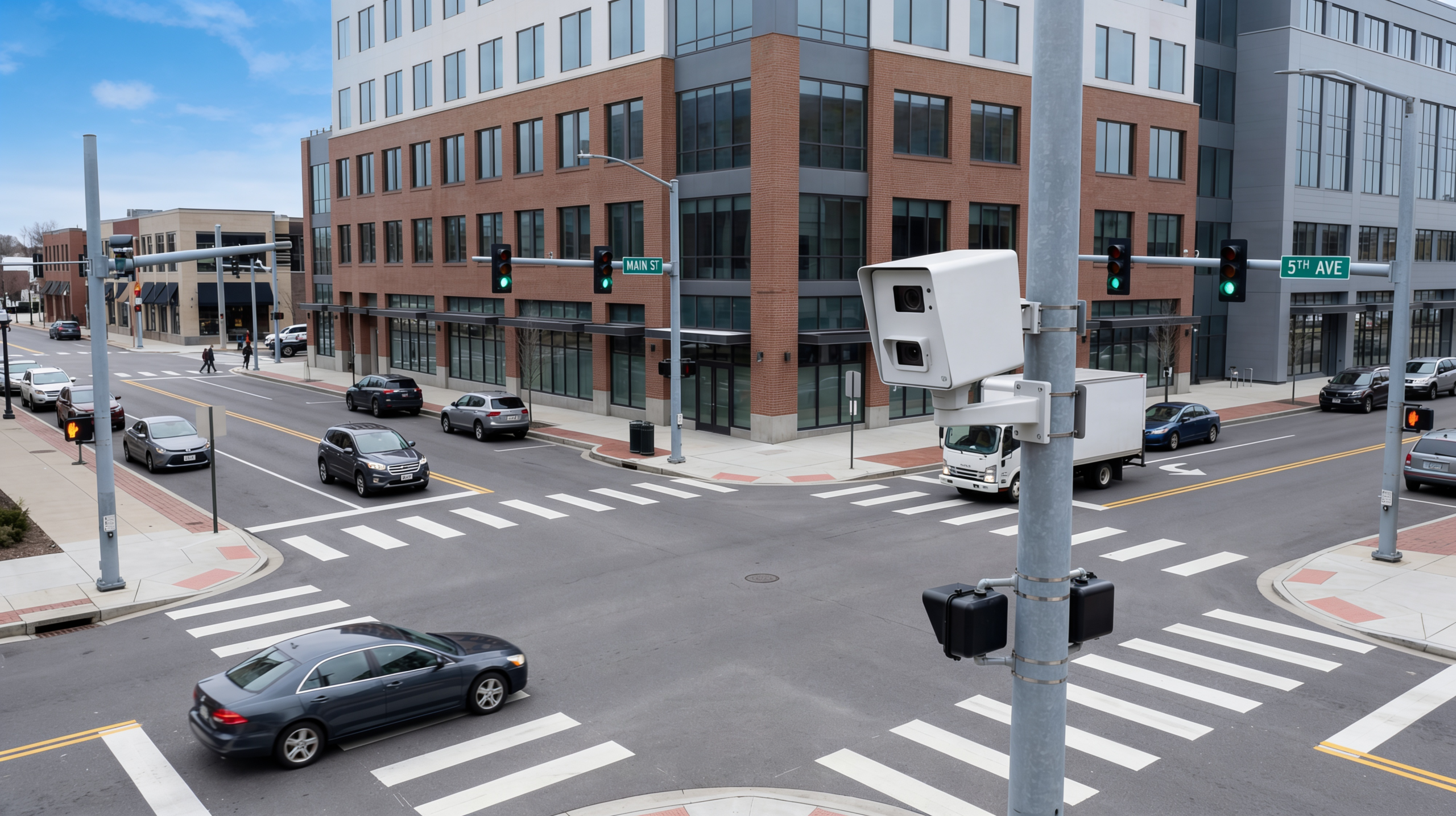
I will start with a confession, because it is the honest place to begin. I got a ticket from one of these cameras. I was speeding, I knew I was speeding, and I deserved it. Integrity is what you do when nobody is looking, and a camera is the thing that was looking when no officer was. I paid it, I was not thrilled about the amount, and the next time I came through that stretch I had a much lighter foot on the pedal. The technology did exactly what it was supposed to do. It changed my behavior.
So let me say plainly where I land, because I want you to read the rest of this knowing my actual position. I am not against automated enforcement. I have watched speed and red-light cameras take a dangerous intersection and calm it down in a way that almost certainly saved someone’s life. The technology works. The data on that is not close. What I am against is the way these programs are so often built, sold, and run, because that is what gets them torn out of the ground, and a program that gets torn out did not make anyone safer. It just burned the trust between a community and the people sworn to protect it, and that trust does not grow back the way it came out.
This piece is about why these programs fail, why a smaller number of them succeed, and what the difference actually is. I will tell you up front: the difference is almost never the camera.
The pattern of failure has a name, and it is not the hardware
Look at Chicago, because it is the cautionary tale every agency should study before signing anything. The city’s red-light and speed-camera program raised more than 600 million dollars in fines since it began in 2003. From red-light cameras alone, the city took in roughly 285 million dollars in just five years. By any revenue measure, it was a runaway success. By the measure that actually matters, public trust, it was a catastrophe.
The program collapsed under its own integrity problems. A class-action lawsuit alleged the city had violated drivers’ due-process rights by ignoring its own notice requirements, giving motorists a 21-day window where the law required 25, and skipping a second notice the code demanded. The city ended up agreeing to a settlement of nearly 39 million dollars, refunds and debt forgiveness affecting around 1.5 million tickets. One longtime alderman, a critic from the start, put it as plainly as anyone could: he had said for years the whole thing was more about revenue than public safety. When the bill came due, his question was simply where the city would find the money to pay it back.
And then there is the part that should make every chief and city manager sit up straight. The Chicago program was not just badly run. It was criminally corrupt. The city’s first red-light camera vendor became the center of a federal bribery case. The vendor’s chief executive was sentenced to 30 months in federal prison and more than 2 million dollars in restitution for funneling cash and benefits, golf trips, hotels, meals, to a city official in exchange for steering contracts. That official was convicted on mail fraud, wire fraud, bribery, and tax counts. The middleman testified that he stuffed bonus money into envelopes and handed it over during meals in Chicago restaurants. Over the years the bribes flowed, the program grew from a 25 million dollar contract to a sole-sourced 33 million dollar deal to another worth 66 million for nearly 250 more cameras. The same vendor turned up in a separate bribery scheme in Ohio. The city’s own inspector general said the situation demanded a response to “redeem the frayed confidence of the public.”
I do not raise Chicago to scare anyone away from the technology. I raise it because it is the perfect illustration of what happens when a program is built around revenue and vendor interests instead of safety and community trust. Los Angeles suspended its own camera program years ago amid public outrage, much of it over tickets for the rolling right turn, the so-called California roll, that drivers felt were technical traps rather than safety measures. These are not stories about cameras that did not work. They are stories about programs that lost the public, and once you lose the public, the cameras come down.
What this technology can actually do when it is done right
Now let me show you the other side, because I promised you my honest position and that includes the fact that this technology, governed correctly and introduced honestly, is one of the most effective safety tools we have.
New York City is the example I point agencies to. The city launched automated speed enforcement in 2014 in 20 school zones, as a pilot, with state authorization, and built it out deliberately from there into the largest program of its kind in the nation, more than 2,400 cameras across 750 school zones. The results are not ambiguous. Speeding at camera locations dropped dramatically, by some measures more than 60 percent and at fixed locations far higher than that. Injury crashes fell. Pedestrian crashes fell by roughly a quarter. The federal government has reported that school zones with safety cameras saw a 55 percent reduction in fatalities. And here is the number that tells the real story: only about 19 percent of violators were repeat offenders, and average daily violations fell roughly 60 percent over time. That is not a revenue machine. That is a behavior-change machine. People got the message and slowed down, which is the entire point.
Why did it work in New York and fail in Chicago, with the same basic technology? Because New York built it as one piece of a broader, data-driven safety strategy, paired it with lowered speed limits and street design, protected it with equity safeguards and real evaluation, and, crucially, had genuine community advocacy behind it. Families who had lost loved ones to traffic violence became some of the program’s most powerful voices. The program was framed, from the beginning, as what it was: an effort to keep children from being killed in school zones. Nobody had to go digging to find out the city was running it. The city told them, and told them why.
That is the whole difference. Same camera. Opposite outcome. The variable was never the hardware. It was the governance, the honesty, and the trust.
The revenue trap, and the question nobody asks out loud
I spent years on the vendor side of public safety technology, so let me be fair to the vendors before I am hard on the structure. Most of the companies in this space are doing real work, and many genuinely want communities to be safer. But a vendor is a business. New technology has to be sold, deployed, and monetized, or the company moves on to the next thing. That is simply how business works, and public safety is not exempt from it. The problem is not that vendors want to make money. The problem is what happens when a program is structured so the vendor makes money at every single layer.
Think about what that stack looks like. The vendor sells the technology. The vendor sells or builds the infrastructure. The vendor licenses the software. The vendor processes the tickets. The vendor stores and polices the data. The vendor, in many cases, is the entity actually interacting with the citizens who are paying the fines. And at the end of all of it, the local agency, the one whose name is on the ticket, receives a fraction of the revenue. When a community sees that its city is keeping a quarter of what the vendor takes, the program loses its integrity in an instant, no matter how good the safety case is. It looks like exactly what the cynics say it is: a money grab dressed up as public safety.
Here is the part most people have never stopped to consider. We do not expect that our traffic ticket is completely private, but most of us still assume there is police involvement in the process. Often there is not. The system is installed, and the police department has nothing to do with the day-to-day of it. It is fully managed by a private vendor, and the department’s only real connection to it is a check for its percentage. A private company is making substantial money operating the system and governing the data, and the local police, the people accountable to the community, have no working knowledge of what is moving through it. That is not a structure any community expects, and it is not one they forgive when they discover it.
So here is the question I wish more agencies would ask out loud before they sign: does the penalty fit the crime, or has the fine been inflated to cover a premium vendor contract? If a driver gets a 175-dollar ticket, how much of that is the actual, justifiable penalty for the violation, and how much exists because the city is paying a technology vendor a premium to run the whole apparatus? I am not saying I know the answer for any given program. I am saying it is a fair question, it is a question the community deserves a transparent answer to, and most programs never ask it. The healthy alternative is straightforward in principle: the agency stays genuinely involved, doing quality assurance, watching the data, keeping the system in good condition, ideally in a real partnership with the vendor rather than handing the whole thing over. If you are going to outsource a piece of it, make the price fair, make the books transparent, and keep your own subject-matter experts in the loop. Never let it become a fully vendor-owned system. That is the wrong thing to do, and it sends the wrong message to the people you serve.
The part nobody prepares for: change inside the agency
Here is where I want to spend real time, because this is the work that almost no one budgets for and the work that most often decides whether a program lives. Turning on an automated enforcement system changes the agency itself, and if you have not prepared the organization for that change, you are starting from behind.
This is organizational change management, and it is a discipline in its own right. It is one of the things we do at Sentinel, we have our own methodology built specifically for public safety, and I am telling you from direct experience that it makes the difference between a program that takes hold and one that comes apart. I have been part of agency transitions in just the last couple of years that pulled off things that simply would not have happened without a real change-management plan behind them.
So think about everything that shifts the day the cameras go live. There is an administrative load that lands somewhere. There is very likely a new system in front of the courts, which may not be set up to handle it. And there is the reaction inside the department itself, which agencies consistently underestimate. The moment an automated system goes in, officers tend to go straight to one thought: this is taking work away from us. Maybe the budget that used to fund traffic enforcement positions is now funding technology, or funding the vendor’s contract. I am not saying that is always what is happening. I am saying that is the immediate concern, and if you do not frame the program in a way that shows the benefit to both the community and the force, the officers will not see the value in it. You have to manage that expectation before it hardens into resentment that leaks out into the community.
I think about rollout intensity like a volume button. You can turn it all the way up and deploy at full force on day one. You can bring it up gradually. You can run a small prototype first and learn from it. There is no single right setting, and the only way to know which one fits your agency and your community is to do the work to find out. But simply showing your people that you are having the conversation, that you understand how this affects their jobs and how the community might receive it, changes how the whole thing is digested internally. Effort that is visible is effort that earns buy-in.
And do not forget the dispatch center, because almost everyone does. When these tickets start going out, residents are going to call to complain, and they are going to call the agency, not the vendor. Is the communications center ready for that? What is the script? What are the call-takers telling people? There is nothing worse for a frustrated citizen than to call in with a complaint or a question and reach a dispatcher who has no idea what they are talking about. You need a plan: the call-takers and dispatchers educated enough to help, a clear path to route people to a website or a callback from a public information officer, and a single, consistent answer to the questions you know are coming. The administrative paperwork may sit with the vendor, but the phone calls come home to the agency.
The part that decides everything: bringing the community along
If the internal work is the foundation, the community work is the whole house. And here I have to say something I believe to my core: no two communities are alike, and the solution that is right for a large agency in a large city is, with one hundred percent certainty, not the right solution for a small agency in a small town. I know this from both ends. I grew up in a town of ten thousand people, and I know how to walk back into a town like that and read where its head is at. I have also spent a great deal of my career in metropolitan Los Angeles, working with some of the largest agencies in the country. The difference between those two worlds is astronomical. Anyone who tells you they have a one-size template for community engagement has never actually done it.
Real community change management starts before a single camera is mounted, by establishing a baseline. You go out and you poll the community, you gather a genuine read on how these people are likely to receive this change and what risks the rollout might hit. Some of the data points you collect will look, on their face, like they could not possibly matter. I promise you there is science behind them. I did not fully appreciate that until I studied change management as a discipline, and it is genuinely fascinating how the right questions surface things that would otherwise have stayed buried. The practice teaches you how to ask in a way that solicits meaningful input, not angry, emotionally charged venting, but input that actually reflects what people think and need. That skill alone separates the agencies that get useful answers from the ones that just get yelled at.
The engagement is a heavy lift at the front of the program, sustained involvement all the way through it, and, in the way we run it at Sentinel, a deliberate return at the end for post-go-live engagement. After the system has been live a while, you poll again. What did the community receive well? What did we get right, and what do we need to do differently? Where are the hot spots? If you put it on a heat map, which areas still need attention? Because perception moves in waves. When a system first switches on there is shock, the change is hot and present and people are loud about it. Then, as it becomes routine, as the quality assurance improves and the agency gets better at communicating, things tend to settle. That is what you want. But if your post-launch engagement shows it is not settling, you have caught a problem while you can still fix it. Change management is a living, breathing thing, carried out over the long term. It is an investment of time, energy, and money, and the return on it is real. Without it, you are taking an extreme risk with your community’s trust.
A community marketing playbook most agencies never think of
Let me get specific and tactical, because this is where I want you to see that there is a real craft to this, the kind a vendor’s deployment team is simply not built to provide.
Start where the problem already lives. Pull your computer-aided dispatch heat map and find the spot in your community where you have been getting the complaints, the intersection where neighbors have been calling in for months about speeders, about near-misses, about worrying for their kids. That is where you begin, and those neighbors are your first and most important asset. Go talk to them. Tell them, honestly, that there is a technology that could address the exact problem they have been reporting, that it is controversial, and that you believe it could make their street safer and maybe save a life. You are not just informing them. You are building your cheerleading squad. The people who have been begging for help become the people who stand up for the program when it reaches the wider public.
Because it will reach the wider public, and when it does, other residents who are not affected by that dangerous intersection will have opinions. They will raise privacy concerns. They will talk about their rights. That is the moment you call on your cheerleaders, and you ask them to come to the council meeting and speak. Nothing in that room is more powerful than a parent from the affected neighborhood saying, in their own words, why this matters. And you back them with data, because data does not lie and data does not get emotional. Pull every statistic from that location, the call volume, the crashes, the injuries, the near-misses, and put it into clean, sharp charts. Have handouts ready. Have your people briefed and ready to speak to it. When you present facts and someone else presents feelings, the facts hold the room. Nobody complains about a system they helped build.
When you do turn it on, lead with warnings, not penalties. Send warning notices first, and be crystal clear on those notices about the date the warnings stop and the citations begin, and exactly what the penalty will be. You are giving people a fair shot to correct their behavior, which is the entire point of the program in the first place. Then, when the penalty phase begins, you will have already earned the right to it. And at your next community meeting, bring the results. Chances are you will be able to show repeat offenders, the same vehicles coming through again and again, which is genuinely persuasive. Remember that in the old model you only ever heard about a problem when a resident finally got fed up enough to pick up the phone. Now you are capturing every single violation, and that total volume is a striking, honest picture of how bad the problem actually was. Share the success story before you ever attach a dollar sign to it.
How you publish all of this matters too. Websites, Facebook, the platforms where your community actually gets its information. In some communities, the right move is a lighter, more human touch, even officers and residents engaging on a platform like TikTok, framing things with a bit of tasteful humor, what some call humanizing the badge. Done well, in the right community, that can be powerful. Done wrong, it falls flat on its face. So test it on a small group first, because not everyone finds the same things funny, and lean on a consultant or marketing partner to help you read it. In other communities, it is just good old-fashioned communication: a single source of truth so everyone is going to the same place for the same information, and call-takers educated enough to point people there. Whatever you choose, do not let mixed messages out the door.
And then, only then, do you talk about revenue, and you talk about it with care. The sequence is everything. First you show the community you built something to keep them safer. Then you show them it is working. Then you explain that, like any rule, there is now a penalty attached, and that people were warned and given every chance to comply. And here is the move most agencies never make: tell the community where the money goes, and make it specific. The thing that gives people heartburn is revenue vanishing into a faceless general fund, more money the city is collecting and who knows where it goes. Imagine instead if you could say, in good faith and then prove it, that the revenue from this program is going back into this neighborhood, into something that benefits the very community where the cameras sit. That single decision can turn a revenue argument from a liability into a reason to support the program.
I will be honest about the playbook moves that show a firm like ours has done this and the vendor has not, because that is a fair question to ask of me too. The vendor’s goals and the agency’s goals and the community’s goals all overlap somewhere in the middle, everyone wants the thing live and working and the community safer. But the vendor also has goals the agency does not share, because the vendor is a business and there is revenue attached to every device. That is not a knock on them. It is just the reality of why an independent voice matters. A good consulting firm comes in and builds the plan that keeps the vendor transparent and accountable, that confirms the price is fair and reflects what the work actually costs, that keeps the agency right with its community. Any good vendor that has built a genuine partnership with an agency will welcome that conversation and want to be part of the solution. If a vendor is instead trying to sell you a bill of goods, manage everything behind a curtain, and mark it up three times over while you do not quite understand what you are paying for, that is a relationship worth questioning. A good consultant will help you ask the right questions.
What governance would have changed
If you go back and run the forensics on the programs that got ripped out, the cause of death is remarkably consistent. A misinformed and under-communicated community. A department that did not back the system. No real community engagement. Questionable contract terms and questionable vendor involvement. No accountability. And in almost every case, no outside, unbiased firm in the room, no one whose only job was to look at all sides and keep the program honest.
So the things governance would have changed are the mirror image of that list. Transparency about what the technology is doing and how much revenue it is generating, surfaced proactively, not pried loose later. A genuine community engagement effort that started before deployment and continued long after. Contract terms that keep the agency involved and the pricing defensible. A safety-first framing that earns the revenue conversation rather than leading with it. And data protection treated as the serious obligation it is, because when you sign up to collect this information, you sign up to protect it, and the agency, not the vendor, is the one whose name ends up in the headline.
When a program is run entirely by a vendor’s project management and deployment team, it tends to march to the vendor’s timeline and the vendor’s benefit. I am not saying that is malicious. I am saying the vendor’s job is to deploy technology, on budget and on schedule, exactly as the statement of work defines it, and to make sure that technology works. The vendor’s job is not to go into the community and do the change management, the marketing, and the communication that decide whether the program survives. I cannot name a single vendor using organizational change management as part of its deployment methodology in a way that helps an agency and a community embrace a change like this. That is precisely the gap an independent firm exists to fill. An outside, non-biased partner looks at both sides and keeps the agency in its community’s good graces, which is the only place a program like this can survive.
Who this is for, and the human part a machine cannot do
I wrote this for the people who get handed these decisions and are not equipped by training to make them alone. The city manager. The traffic engineer. The police chief. We made that chief the chief because he is good at police work, and he should be. But he is very likely not a technologist, not a change-management expert, and not a marketer, and this technology demands all three. There is nothing harder than holding a public position already under scrutiny and then being handed a tool that arrives wrapped in this many dynamics. If you are not prepared for it, you are in for an interesting ride.
This article will not solve it for you. It is not meant to. It is meant to show you the highlights of why some programs failed and others succeeded, to warn you about the pitfalls, and to open a door to a conversation if you want to know more about how we think. I will be the first to tell you that not everything we think is the only way. There are a lot of talented professionals who do this work well, and if all this article does is prompt you to write down a few good questions and go ask them of someone, it has done its job. We are proud of our methodology and the agencies we have served, but the goal here is simply to put useful information in front of people who need it.
Because in the end, this is the thing I most want you to take away. We live in a world of automation and artificial intelligence now, and these tools are extraordinary. But there is a human side to making them work, and that human side cannot be produced by an algorithm and cannot be automated. The transparency. The relationship. The integrity. The trust. That is human work, and it is the work that decides whether the technology lifts a community up or tears it apart. Do not let the technology erode the trust between you and the people you serve. Govern it well, introduce it honestly, bring your community along, and it will do what it was meant to do. Get that part wrong, and no camera, however advanced, will save the program. The public will pull it out of the ground, and if I were the chief watching that happen, I would walk down and take it out myself, just to make the statement, because the trust was always worth more than the device.
Justin Scott is Co-Founder and Managing Partner of Sentinel Solutions Group, an independent, practitioner-led advisory and managed technology firm built for public safety, government, and mission-critical environments. Sentinel governs the program. We never sell the platforms.